Overview
General Contractors of Bryan manages retail center construction for developers, property owners, and mixed-use investors who need a commercial site delivered with the circulation, parking, shell quality, and tenant-readiness that supports successful retail operations from opening day. Bryan's retail market is distinct from College Station's university-driven commercial strip — Bryan has an older, more established retail base along Texas Avenue and the major Highway 6 corridor, with service-based retail, automotive, home improvement, and neighborhood-serving tenants that require different building and site configurations than the student-oriented retail mix across the county line.
Retail center delivery is controlled by three things: site access and parking performance, shell delivery tied to tenant build-out schedules, and opening-date turnover. A retail center that opens with unfinished parking, missing site lighting, or delayed tenant spaces damages leasing momentum and generates landlord liability that outlasts the original construction contract. We prevent those failures by planning site, shell, and tenant turnover as one integrated schedule from preconstruction rather than managing them as separate contract scopes that happen to be on the same site.
Bryan's commercial corridors — the Texas Avenue frontage, the Highway 6 retail strip, the William Joel Bryan Parkway area — have specific access management requirements, existing utility conditions, and median restrictions that affect how retail sites can be developed and accessed. We incorporate those corridor conditions into site planning before civil drawings are submitted.
What Retail Center Construction Includes
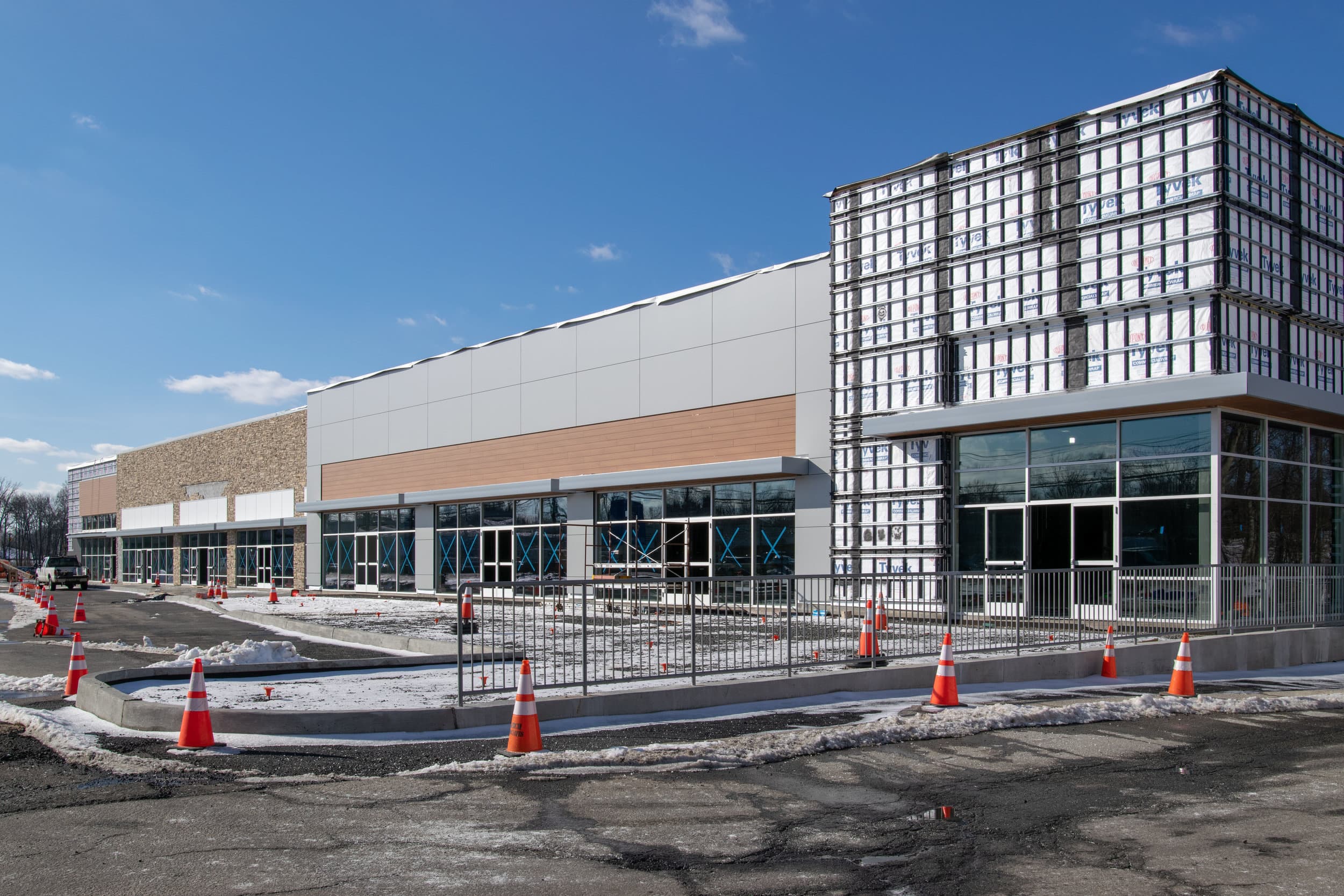
Retail center construction is delivered as a coordinated general contracting scope from site programming through occupancy-ready tenant turnover. Leasing schedules and opening dates drive construction sequencing.
- Site and parking coordination with tenant turnover schedules and customer access requirements
- Storefront and shell delivery sequenced by tenant move-in priority
- Tenant-improvement interface management between the core/shell and fit-out contractors
- Hardscape, landscape, and site lighting paced to the building opening date
- Utility and service-area coordination across multiple tenant spaces
- Phased turnover planning for centers with staggered tenant opening dates
Our Retail Center Construction Process
Retail center delivery follows a leasing-driven sequence from site programming through final occupancy. Shell and site milestones are planned backward from the first tenant opening date.
01Leasing and site assumptions
We start with the developer's leasing map, tenant mix assumptions, and opening-date targets. Those inputs drive the shell delivery sequence — anchor tenants that need the earliest possible move-in access get prioritized in the construction schedule, while smaller in-line suites that can tolerate a later start are sequenced to fill the schedule without competing for the same subcontractor resources.
Site package sequencing
Site grading, underground utilities, fire lines, and parking lot subbase are released as the first construction package so that horizontal work can advance in parallel with the building permit review. Bryan retail sites frequently require drainage coordination with the city and access connection approvals from TxDOT for properties along state highway frontages — those approvals take time and need to be pursued during design, not after construction starts.
Shell execution
Shell construction is managed so that individual tenant bays can be turned over for fit-out in a sequence that matches the leasing schedule. We do not require the entire shell to be complete before any tenant fit-out begins — we sequence shell work to deliver completed bays on a rolling basis while the rest of the building is still under construction.
Tenant turnover coordination
Each tenant bay is handed over with a clear scope of work completed — demising walls, rough-in stubs, electrical panels, storefront framing — and a documented list of work remaining. We coordinate each handover with the tenant's contractor to avoid conflicts between the core-shell construction still in progress and the fit-out work underway in completed bays.
Opening-date closeout
Site paving, striping, landscaping, signage, and exterior lighting are completed in a final push timed to the first tenant opening date. We manage the city's certificate of occupancy process to ensure CO issuance is not the constraint that delays a tenant from opening on a announced date.
Where Retail Center Construction Creates the Most Value in Bryan
Bryan's retail market spans neighborhood centers, service-oriented retail, automotive, and highway corridor development. These project types represent the strongest fit for coordinated retail delivery.
Neighborhood Centers Serving Bryan's Residential Base
Bryan's established residential neighborhoods in the older urban district create demand for neighborhood-serving retail that is distinct from the university-oriented commercial strip near Texas A&M. We deliver these centers with tenant mixes and site configurations tuned to the grocery, pharmacy, service, and food-service anchors that serve Bryan's family and working-class residential base.
Service-Based Retail and Automotive
Automotive service, tire and auto parts, and service-commercial uses are strong Bryan retail categories. We build these centers with the drive-through access, overhead door placements, and service bay configurations that auto and service tenants require, rather than applying a generic retail shell template to an automotive use.
Multi-Pad Developments
Pad-site developments along Highway 6 and the major Bryan arterials benefit from a general contractor who can coordinate multiple pad buildings on a shared site with one parking field, shared access points, and utility mains that serve multiple buildings. We manage those shared-site elements to avoid the coordination conflicts that arise when each pad is treated as an independent project.
Opening Dates, Phasing, and Bryan Retail Corridor Conditions
Retail center delivery is more schedule-sensitive than most project types because tenant leases often have co-tenancy clauses, operating covenant requirements, and opening obligation dates that create real financial consequences for late delivery. We build retail center schedules around those tenant obligation dates from the beginning, not as a reaction to leasing pressure during construction.
Bryan's Highway 6 corridor and Texas Avenue frontage properties have specific TxDOT and city access requirements that can extend the civil design and approval process by 60 to 90 days if initiated late. We advise retail center developers to begin access permitting as soon as the site plan is developed enough to show driveway locations.
Related Markets
This service is available across Bryan and nearby regional markets where commercial and industrial owners need one accountable project lead from planning through closeout.
Bryan, TX
Bryan is the industrial and heritage anchor of the Brazos Valley — a working city with manufacturing roots, a historic downtown Texas Avenue corridor, Blinn College, the Texas A&M Health Science Center, and active commercial growth along Highway 6 and the RELLIS Campus corridor.
View location page
College Station, TX
College Station adds university-adjacent commercial demand, medical growth, and mixed owner-user projects to the broader Bryan market, with active corridors and user-facing finish requirements driven by the TAMU community.
View location page
Wixon Valley, TX
Wixon Valley is a small unincorporated community within Bryan's service radius where owner-user commercial buildings, support industrial, and agricultural-adjacent facilities benefit from general contracting with local Brazos Valley knowledge.
View location page
Hearne, TX
Hearne is a Robertson County logistics and industrial support market north of Bryan along the Highway 6 and US 79 corridor where warehouse delivery, fleet terminals, and service-commercial buildings need practical general contracting.
View location page
Caldwell, TX
Caldwell is the Burleson County seat on the Highway 21 corridor connecting Bryan to the Austin market, with owner-user commercial and industrial construction driven by agricultural services, local business growth, and the county's working agricultural economy.
View location page
Franklin, TX
Franklin is the Robertson County seat north of Bryan on the Highway 6 corridor with civic, commercial, and industrial-support construction demand for county government, local businesses, and the agricultural economy.
View location page
Frequently Asked Questions
How do you manage tenant fit-out coordination on a retail center under construction?
We establish a clear demarcation between the core-shell contractor scope and the tenant fit-out scope through a landlord work letter that is reviewed during preconstruction. As each bay is ready for fit-out, we provide the tenant contractor with a formal shell-ready verification, a punch list of outstanding core-shell items, and an access agreement that establishes safety and coordination requirements while both crews are working on the same building.
Can General Contractors of Bryan deliver a retail center with staggered opening dates?
Yes. Phased retail center openings are common when anchor tenants open before in-line tenants are ready, or when phases of a center are delivered sequentially. We design certificate of occupancy phasing plans with the City of Bryan to support staggered openings so each tenant can open when their space is ready without waiting for the entire center to complete.
What are the access management requirements for retail development along Bryan's Highway 6 corridor?
Highway 6 is a state highway and driveway access requires TxDOT approval through the access permit process. Bryan's major arterials require a city access permit. Both processes require traffic impact analysis for larger developments. We coordinate those approvals as part of the preconstruction civil design process to avoid delays during construction.