Overview
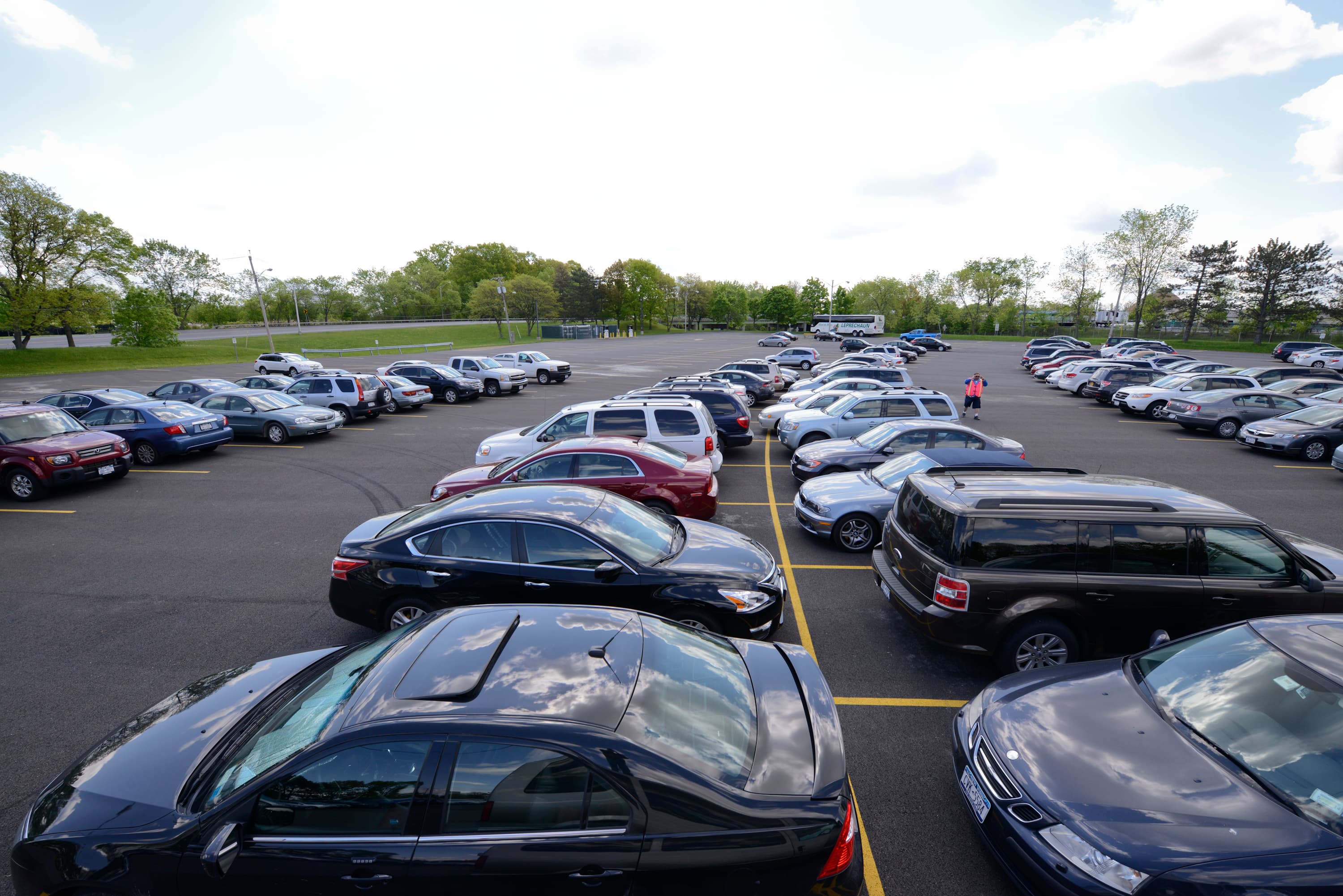
General Contractors of Bryan manages parking lot and paving construction for commercial and industrial sites where surface durability, drainage performance, and operational circulation are as important as the building itself. In Bryan, paving is not a simple commodity scope — Brazos County's expansive Houston Black clay creates subbase movement that destroys improperly designed pavement within a few years of opening. Truck traffic at industrial sites, the heat-softening potential of asphalt in a 100-degree Texas summer, and the need for drainage systems that handle Gulf-track rainfall events all factor into how we plan paving projects here.
Commercial parking lots that fail within five years of opening are a symptom of poor preconstruction planning, not bad luck. Edge cracking, base failure, and alligator cracking in the wheel paths are predictable when subbase depth, compaction testing, and pavement section design are not matched to the site's specific soil conditions and traffic loading. We prevent those failures by treating paving as an engineered system, not an afterthought after the building is done.
Paving scope in Bryan also intersects with corridor access management, drainage tie-ins to city storm sewer systems, and phased turnover requirements for projects where the building opens while paving work is still underway. We plan those coordination points before mobilization so that access can be maintained and turnover can be staged without forcing the owner to choose between an open building and an unfinished parking lot.
What Parking Lot and Paving Construction Includes
Paving and parking construction is delivered as a coordinated scope from grading through final striping and access-control installation. Drainage, subbase preparation, and phasing are planned together rather than addressed separately.
- Grading and subbase preparation with moisture-conditioning on Brazos County expansive clay
- Drainage tie-in coordination with city storm sewer or detention requirements
- Curb and gutter installation with inlet locations confirmed against drainage design
- Pavement section design matched to traffic loading and subbase soil conditions
- Paving-window planning to avoid summer heat softening during asphalt mat placement
- Site striping, wheel stops, and access-control installation at turnover
Our Parking Lot and Paving Construction Process
Paving delivery follows a sequenced path from site-readiness review through final striping. Drainage and subbase phases are the quality controls that determine long-term pavement performance.
01Site-readiness review
Before any paving scope begins, we review the site grading plan, drainage design, and utility location map to confirm that underground utilities are complete, drainage inlets are in their final positions, and subbase soils have been prepared to the compaction density required by the pavement design. Paving over incomplete underground work creates expensive repair cycles.
Drainage and curb sequencing
Curb and gutter installation and drainage inlet placement are completed and inspected before any base course material is placed. Drainage performance is the single most important factor in long-term pavement life in Bryan because the expansive clay subbase moves when moisture varies — drainage that manages surface water away from the pavement edge is the first line of defense against edge failure.
Paving execution
Base course and surface course are placed to the engineered section depth with compaction density verified by testing. For asphalt work in Bryan's summer climate, we schedule mat placement during morning hours when surface temperature is below 90 degrees and avoid placing asphalt when ambient temperature or surface temperature would prevent proper compaction. Concrete paving on truck courts and heavy-vehicle areas is preferred over asphalt where load cycling is severe.
Marking and access controls
Striping, wheel stops, accessible space markings, and fire-lane designations are applied after the surface has cooled and cured to prevent marking adhesion failures. We sequence these installations to allow visual inspection of the completed surface for any areas requiring repair before markings are applied.
Final turnover
Paving turnover includes drainage performance verification (flow testing at inlets during a rain event or hose test where a rain event is not available), striping completion, and a final walk of the surface for cracking, raveling, or other defects that need correction before the owner accepts the scope.
Where Parking Lot and Paving Construction Creates the Most Value in Bryan
Commercial paving in Bryan spans retail, industrial, office, and institutional sites. These applications represent where engineered paving design makes the most measurable long-term difference.
Retail and Commercial Centers
Retail parking lots in Bryan receive heavy daily traffic that reveals poor subbase preparation within the first few wet-dry seasonal cycles. We design retail parking lots with drainage, subbase, and pavement sections that hold up under daily use without the cracking and base failure that plague under-engineered commercial paving.
Industrial Truck Courts and Yards
Industrial truck courts at warehouses, distribution centers, and manufacturing facilities in Bryan require reinforced concrete paving rather than asphalt in most cases because 80,000-pound trucks cycle through the same wheel paths daily. We coordinate truck court paving with dock grade, drainage slope, and trailer spotting zone geometry.
Bryan Towne Center and Corridor Redevelopment
Redevelopment projects along Bryan's Texas Avenue corridor and Bryan Towne Center often include parking lot reconstruction as part of the site improvement scope. We coordinate paving phasing around active business operations, maintain temporary circulation during construction, and sequence final paving and striping to coincide with the building's opening date.
Institutional and School Campuses
Bryan ISD facilities and Blinn College Bryan campus projects include parking lot construction and renovation that must meet ADA accessibility requirements, fire-lane standards, and bus circulation geometry. We design institutional paving around the specific vehicle types and traffic volumes that school and college facilities generate.
Drainage, Subbase, and Bryan Paving Conditions
Bryan's most important paving design variable is subbase soil behavior. Expansive clay below the pavement section moves seasonally, and that movement breaks asphalt edges, cracks joint seals, and undermines inlet boxes within a few years if the pavement section is not designed to tolerate or isolate the subbase movement. We require geotechnical input on paving sections for any project where the subbase conditions have not been previously characterized.
Summer paving in Bryan requires careful weather management. Asphalt mat temperature, ambient temperature, and wind speed all affect compaction density and surface life. We schedule paving work around weather windows that support quality compaction rather than accepting poor compaction because the schedule demands placement on a hot afternoon.
Related Markets
This service is available across Bryan and nearby regional markets where commercial and industrial owners need one accountable project lead from planning through closeout.
Bryan, TX
Bryan is the industrial and heritage anchor of the Brazos Valley — a working city with manufacturing roots, a historic downtown Texas Avenue corridor, Blinn College, the Texas A&M Health Science Center, and active commercial growth along Highway 6 and the RELLIS Campus corridor.
View location page
College Station, TX
College Station adds university-adjacent commercial demand, medical growth, and mixed owner-user projects to the broader Bryan market, with active corridors and user-facing finish requirements driven by the TAMU community.
View location page
Wixon Valley, TX
Wixon Valley is a small unincorporated community within Bryan's service radius where owner-user commercial buildings, support industrial, and agricultural-adjacent facilities benefit from general contracting with local Brazos Valley knowledge.
View location page
Hearne, TX
Hearne is a Robertson County logistics and industrial support market north of Bryan along the Highway 6 and US 79 corridor where warehouse delivery, fleet terminals, and service-commercial buildings need practical general contracting.
View location page
Caldwell, TX
Caldwell is the Burleson County seat on the Highway 21 corridor connecting Bryan to the Austin market, with owner-user commercial and industrial construction driven by agricultural services, local business growth, and the county's working agricultural economy.
View location page
Franklin, TX
Franklin is the Robertson County seat north of Bryan on the Highway 6 corridor with civic, commercial, and industrial-support construction demand for county government, local businesses, and the agricultural economy.
View location page
Frequently Asked Questions
Should I use asphalt or concrete for industrial truck courts in Bryan?
For heavy truck traffic on industrial sites, concrete is almost always the better long-term choice in Bryan. Asphalt softens in summer heat under loaded truck wheels and creeps in wheel paths within a few years. Reinforced concrete truck courts last 20 to 30 years with minimal maintenance under the same traffic loading that destroys asphalt in 5 to 8 years.
How does Bryan's clay soil affect parking lot life?
Expansive clay creates edge-cracking, surface heaving, and inlet box settlement in parking lots that are not designed with adequate subbase depth and drainage. Parking lots on Brazos County clay should be designed with a geotechnical engineer's input on subbase treatment and pavement section thickness.
Can General Contractors of Bryan manage paving on a site that is partially operational?
Yes. We build paving phasing plans that maintain access to occupied buildings and active businesses while paving proceeds in stages. This is common on commercial redevelopment sites in Bryan where tenants cannot be displaced during construction.