Overview
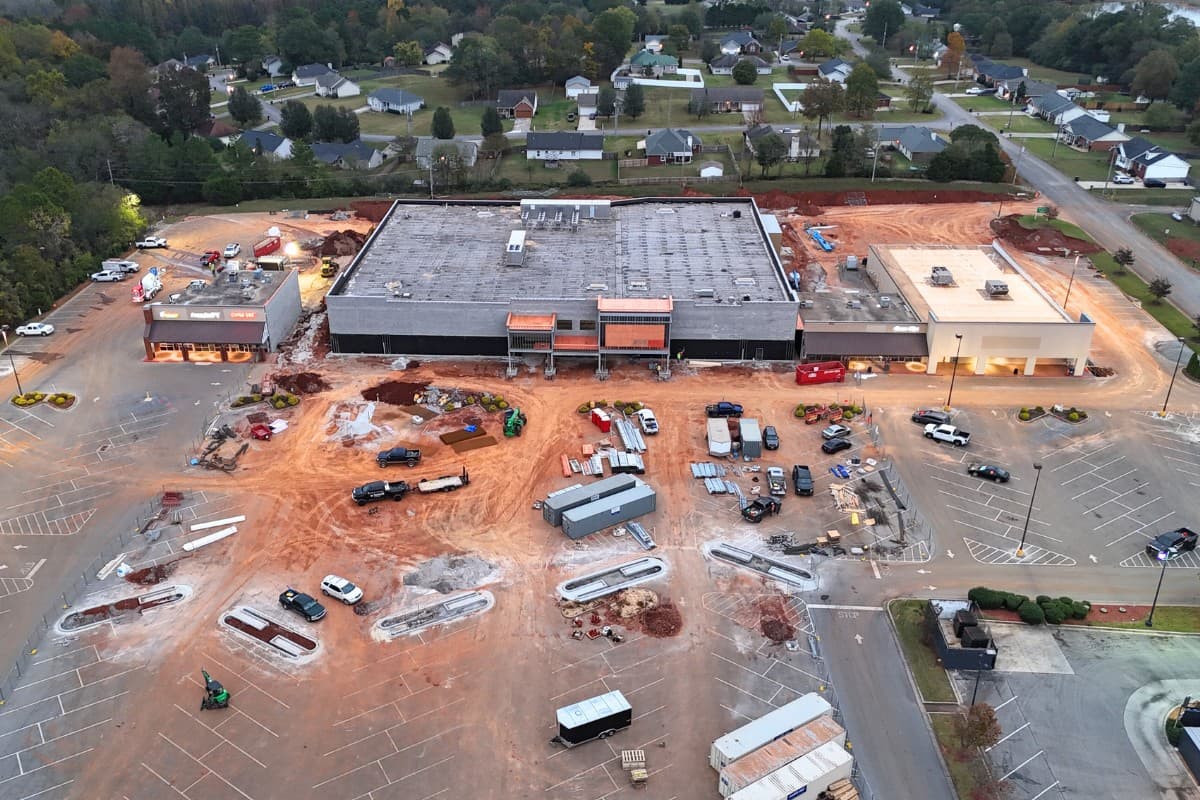
General Contractors of Bryan manages earthwork and heavy civil coordination for commercial and industrial projects where site shaping, drainage, utility trenching, and building pad preparation must be executed correctly to protect the schedule and quality of everything built above grade. In Bryan, earthwork is not a commodity scope — Brazos County's Houston Black expansive clay is one of the most difficult site soils in Texas, and earthwork that is performed without adequate geotechnical management creates building foundation and utility trench problems that outlast the construction contract by years.
The pace of a commercial or industrial construction project in Bryan is established during earthwork. A site that completes grading, drainage, and subbase preparation on schedule gives the foundation contractor a clean handoff and keeps the vertical construction schedule intact. A site that runs behind during earthwork — due to unexpected soil conditions, drainage design changes, or utility conflicts discovered in the field — compresses every subsequent phase and usually results in foundation and paving failures if those compression schedule pressures are allowed to override quality requirements.
Bryan's civil construction context includes specific factors that affect earthwork planning: the city's drainage requirements for new commercial development, the BTU utility easement and corridor conditions that affect trench routing, the Highway 6 and state highway right-of-way requirements for sites along major corridors, and the seasonal weather patterns that create both dry-season cracking and wet-season flooding risks in the Brazos County clay soils.
What Earthwork and Heavy Civil Coordination Includes
Earthwork and heavy civil coordination is managed as a general contracting scope from site-constraint review through building pad certification and handoff to vertical construction. Geotechnical quality controls are integrated throughout.
- Mass-grading planning with moisture-conditioning requirements for Brazos County clay
- Erosion and stormwater management coordination with City of Bryan requirements
- Retaining and embankment sequencing for sites with significant grade changes
- Utility conflict identification and resolution before trench work begins
- Haul-route planning for earthwork export or import
- Building pad certification with compaction testing documentation for foundation release
Our Earthwork and Heavy Civil Coordination Process
Earthwork coordination follows a geotechnical-quality-first sequence from site constraint review through pad certification. Quality documentation at each phase protects the foundation contractor and the owner.
01Site-constraint review
We review the site geotechnical report, utility location records, drainage design, and existing improvement conditions before any earthwork begins. For Bryan sites, the geotechnical review focuses on expansive clay characterization — plasticity index, shrink-swell potential, and depth to stable subgrade — which determines how much moisture-conditioning and structural fill placement will be required before the building pad is certified.
Grading and utility release
Mass grading begins with erosion controls in place and the haul route established for export or import material. Utility trenching follows grading in a sequence that avoids conflicts between earthwork equipment and utility installation crews. We maintain an active utility locate service throughout earthwork to prevent damage to existing underground utilities not shown on existing drawings.
Heavy civil execution
Retaining structures, culverts, storm sewer systems, and site drainage structures are installed in the sequence required by the drainage design. We verify inlet inverts, pipe grades, and culvert capacities against the civil drawings before backfilling so drainage performance issues can be corrected before the surface is restored.
Pad certification and handoff
Building pad certification requires compaction density testing at each lift of fill material, documentation of moisture content within the specified range for expansive clay treatment, and survey certification of pad elevation and dimensions. We do not release foundations on the basis of visual or field judgment — compaction test reports and survey documentation are required for every certified pad.
Site stabilization for next trades
After earthwork is substantially complete, we stabilize the site surface against erosion and vehicle tracking that would affect pad certification or utility trench compaction. Temporary seeding, gravel access pads, and construction entrance maintenance are all active management responsibilities, not set-and-forget measures.
Where Earthwork and Heavy Civil Coordination Creates the Most Value in Bryan
Heavy civil work in Bryan spans greenfield development, corridor redevelopment, and multi-building campus infrastructure. These project types represent where front-loaded geotechnical management has the greatest impact.
Greenfield Commercial and Industrial Development
Undeveloped Bryan parcels along the Highway 6, Highway 21, and FM corridors require complete site development from raw land through building-ready pad. We sequence civil work on these projects to minimize the time between site mobilization and building permit issuance and to ensure the building pad is certified before the foundation contractor arrives.
Multi-Building Industrial Campus Infrastructure
Industrial campus development in Bryan requires civil infrastructure that serves multiple buildings and phases. We coordinate earthwork, utility mains, and drainage infrastructure for campus-scale projects as one integrated scope rather than managing each building pad independently and creating conflicts between phases.
Bryan Corridor Redevelopment Sites
Redevelopment sites along Bryan's major commercial corridors often have existing underground utilities, drainage systems, and pavement that affect earthwork planning. We investigate existing underground conditions before any earthwork begins to prevent damage to operating utilities and to avoid discovering conflicts that require design changes after excavation is underway.
Distribution and Logistics Sites Near Highway 6
Distribution center and logistics park development along the Highway 6 corridor requires large-scale earthwork that must be executed efficiently to support the tight schedules that institutional developers expect. We have the equipment, subcontractor relationships, and geotechnical management protocols to deliver large-site earthwork in the Bryan market on schedule.
Water Management, Bryan Clay Soils, and Earthwork Quality
Water management is the most important earthwork quality variable on Bryan sites. Brazos County's expansive clay holds moisture and becomes unstable when wet, making wet-season earthwork especially sensitive to weather. We build weather contingency into earthwork schedules and have plans for protecting exposed subgrade from rain events rather than assuming dry conditions throughout the earthwork phase.
Structural fill placement over expansive clay requires moisture-conditioning the native soil to within a specified range of optimum moisture content before compaction. That conditioning takes time — typically one to two weeks of scarification, watering, and drying cycles depending on starting moisture conditions. We build that time into the earthwork schedule rather than assuming it can be compressed under schedule pressure.
Related Markets
This service is available across Bryan and nearby regional markets where commercial and industrial owners need one accountable project lead from planning through closeout.
Bryan, TX
Bryan is the industrial and heritage anchor of the Brazos Valley — a working city with manufacturing roots, a historic downtown Texas Avenue corridor, Blinn College, the Texas A&M Health Science Center, and active commercial growth along Highway 6 and the RELLIS Campus corridor.
View location page
College Station, TX
College Station adds university-adjacent commercial demand, medical growth, and mixed owner-user projects to the broader Bryan market, with active corridors and user-facing finish requirements driven by the TAMU community.
View location page
Wixon Valley, TX
Wixon Valley is a small unincorporated community within Bryan's service radius where owner-user commercial buildings, support industrial, and agricultural-adjacent facilities benefit from general contracting with local Brazos Valley knowledge.
View location page
Hearne, TX
Hearne is a Robertson County logistics and industrial support market north of Bryan along the Highway 6 and US 79 corridor where warehouse delivery, fleet terminals, and service-commercial buildings need practical general contracting.
View location page
Caldwell, TX
Caldwell is the Burleson County seat on the Highway 21 corridor connecting Bryan to the Austin market, with owner-user commercial and industrial construction driven by agricultural services, local business growth, and the county's working agricultural economy.
View location page
Franklin, TX
Franklin is the Robertson County seat north of Bryan on the Highway 6 corridor with civic, commercial, and industrial-support construction demand for county government, local businesses, and the agricultural economy.
View location page
Frequently Asked Questions
How does Brazos County clay affect earthwork scheduling and cost?
Brazos County Houston Black clay requires more subgrade treatment than typical fill soils because of its high plasticity and shrink-swell potential. Moisture-conditioning cycles, structural fill placement, and compaction testing add cost and time compared to earthwork on more stable soil types. We advise owners to budget for that additional treatment based on the geotechnical report and to schedule earthwork to allow adequate time for conditioning cycles.
What geotechnical testing does General Contractors of Bryan require for building pad certification?
We require density testing at each compacted lift using a nuclear densometer, moisture content verification within the engineer-specified range, and a final survey of pad elevation and dimensions before releasing for foundation work. Those tests are performed by the project geotechnical engineer and documented in test reports that are maintained in the project record.
Can General Contractors of Bryan manage earthwork on an occupied commercial site where portions remain in operation?
Yes. Earthwork on partially occupied commercial sites requires careful management of access, utility service continuity, and dust and tracking controls. We build a site access management plan at the preconstruction meeting that establishes how construction and occupied areas are separated, how utility service to the occupied portion is maintained, and how construction traffic is managed to prevent damage to the occupied areas.