Overview
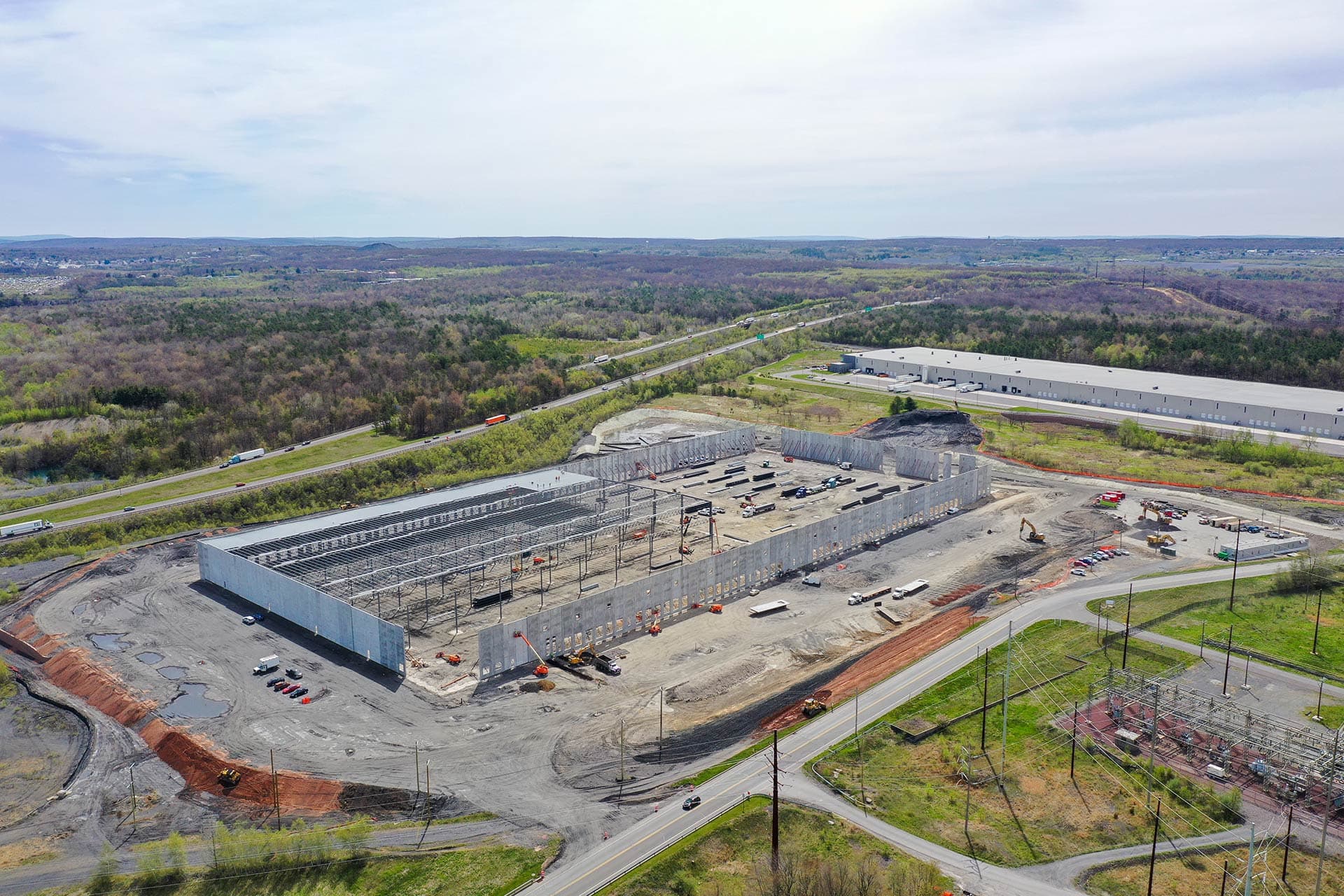
General Contractors of Bryan leads distribution center construction for regional logistics operators, industrial developers, and retail supply chain teams who need large-format buildings delivered with the operational detail that freight systems require. Distribution centers are not just big warehouses — they are transportation systems built in concrete and steel. The yard circulation pattern, dock layout, clear height, column spacing, floor flatness, fire suppression design, and utility routing all need to be coordinated against the owner's operational model before a single form is set.
Bryan's location at the intersection of Highway 6, Highway 21, and the I-45 corridor access routes makes it a logical regional distribution point for the broader Brazos Valley and central Texas market. Easterwood Airport adds air freight access for time-sensitive distribution, and the Sanderson Farms and agricultural processing presence in Bryan means there is an established logistics culture in this market that creates ongoing distribution facility demand.
Distribution center delivery at this scale requires a general contractor who can manage the civil and utility packages in parallel with building design, release structural procurement before the permit is issued, and coordinate tenant improvement or racking installation packages to follow immediately after floor slab completion. That level of schedule management is what separates functional distribution center delivery from a construction project that ends with an empty building and an operations team waiting to move in.
What Distribution Center Construction Includes
Distribution center construction is delivered as a coordinated general contracting scope from site programming through commissioning and operations turnover. Logistics operational requirements drive every planning decision.
- Site circulation layout with truck staging, trailer parking, and employee traffic separation
- Dock-count optimization and dock specification coordination with the owner's logistics vendor
- Structural package release and clear-height verification before foundations are poured
- Roof and enclosure sequencing to protect floor slab placement from weather exposure
- ESFR and utility systems coordination to support high-piled storage operations
- Closeout and commissioning tied to racking installation and equipment move-in schedule
Our Distribution Center Construction Process
Distribution center delivery follows a logistics-driven sequence from programming through startup. Every phase is planned against the owner's operational requirements rather than generic construction milestones.
01Logistics programming
We start by mapping the owner's operational program: daily volume, inbound and outbound dock ratios, trailer parking requirements, office and support square footage, future expansion needs, and any specialty requirements for temperature-controlled or high-value goods. That program drives every subsequent design and construction decision.
Civil and utility sequencing
Site grading, drainage, truck-court subbase, fire lines, and utility connections are released as the earliest construction package so the building pad and yard preparation can advance in parallel with structural design. In Bryan, this means coordinating BTU electrical service, city water and sewer connections, and drainage design with Brazos County requirements before the building permit is submitted.
Superstructure execution
Structural framing, roofing, and wall systems are executed in a sequence designed to protect the floor slab placement from weather exposure and provide a secure envelope for racking installation as early as possible. Embedded items and dock rough-in are completed during the structural phase so no field modifications are needed after the shell is closed.
Dock and systems coordination
Dock equipment — levelers, seals, bumpers, and vehicle restraints — is coordinated with the owner's logistics vendor to confirm trailer compatibility before equipment is ordered. ESFR fire suppression, warehouse lighting, and power distribution are designed around the owner's storage configuration and racking layout rather than generic building standards.
Commissioning and turnover
Turnover is staged to support equipment move-in and racking installation immediately after floor slab verification and fire suppression clearance. We coordinate inspection scheduling to ensure certificate of occupancy is issued before the owner's equipment contractors need building access, and we track punch items in parallel with commissioning so final closeout does not delay operational startup.
Where Distribution Center Construction Creates the Most Value in Bryan
Distribution center demand in Bryan spans regional supply chain, agricultural commodity logistics, and e-commerce support. These project types represent where integrated planning and construction management make the biggest operational difference.
Regional Supply Chain Buildings
Central Texas regional distributors serving Bryan, College Station, Waco, and the surrounding markets benefit from distribution facilities positioned in Bryan's corridor infrastructure. We coordinate these buildings around the carrier specifications and dock configurations that regional distribution operations require, not just minimum building code requirements.
Agricultural and Food Distribution Facilities
Bryan's Sanderson Farms presence and agricultural processing base create demand for food-grade and temperature-sensitive distribution facilities. These buildings require specialized floor coatings, drain systems, sanitation access points, and dock sealing specifications that differ from standard dry-storage distribution product.
E-Commerce Support Warehouses
E-commerce fulfillment requires floor flatness specifications, column spacing, and clear height that exceed standard warehouse parameters. We coordinate those specifications with the owner's materials handling vendor during preconstruction to ensure the building supports the automated systems that e-commerce operations depend on.
Multi-Tenant Logistics Parks
Speculative distribution product in Bryan business parks often involves multi-tenant shells where different tenants have different dock, clear height, and fire suppression requirements. We plan building systems to accommodate multiple occupancy configurations so the developer can lease to the widest possible tenant pool.
Scheduling, Procurement, and Bryan Distribution Market Conditions
Distribution center schedules are controlled by dock equipment lead times, ESFR sprinkler material availability, and floor slab cure time. We release dock equipment specifications, fire suppression procurement, and structural steel simultaneously rather than sequentially to compress the overall schedule.
Bryan's location on Highway 6 provides direct north-south distribution access to the I-45 corridor and south to the Gulf Coast. Highway 21 connects east to I-45 at Madisonville and west toward Austin. We factor those access routes into site circulation planning for distribution centers to ensure trailer ingress and egress paths work with the regional carrier network that will serve the facility.
Related Markets
This service is available across Bryan and nearby regional markets where commercial and industrial owners need one accountable project lead from planning through closeout.
Bryan, TX
Bryan is the industrial and heritage anchor of the Brazos Valley — a working city with manufacturing roots, a historic downtown Texas Avenue corridor, Blinn College, the Texas A&M Health Science Center, and active commercial growth along Highway 6 and the RELLIS Campus corridor.
View location page
College Station, TX
College Station adds university-adjacent commercial demand, medical growth, and mixed owner-user projects to the broader Bryan market, with active corridors and user-facing finish requirements driven by the TAMU community.
View location page
Wixon Valley, TX
Wixon Valley is a small unincorporated community within Bryan's service radius where owner-user commercial buildings, support industrial, and agricultural-adjacent facilities benefit from general contracting with local Brazos Valley knowledge.
View location page
Hearne, TX
Hearne is a Robertson County logistics and industrial support market north of Bryan along the Highway 6 and US 79 corridor where warehouse delivery, fleet terminals, and service-commercial buildings need practical general contracting.
View location page
Caldwell, TX
Caldwell is the Burleson County seat on the Highway 21 corridor connecting Bryan to the Austin market, with owner-user commercial and industrial construction driven by agricultural services, local business growth, and the county's working agricultural economy.
View location page
Franklin, TX
Franklin is the Robertson County seat north of Bryan on the Highway 6 corridor with civic, commercial, and industrial-support construction demand for county government, local businesses, and the agricultural economy.
View location page
Frequently Asked Questions
What is the minimum size distribution center that General Contractors of Bryan can deliver?
We coordinate distribution center projects from approximately 30,000 square feet and larger. Below that threshold, standard warehouse delivery typically provides sufficient function without the specialized logistics programming and systems coordination that distribution center delivery requires.
How do you coordinate ESFR fire suppression in Bryan distribution centers?
ESFR suppression design is coordinated with the owner's storage configuration and the fire suppression engineer during preconstruction. Building height, clear height, and commodity classification all affect the suppression design. We coordinate inspections with Bryan Fire and the State Fire Marshal's office and hold turnover until suppression systems are fully commissioned and inspected.
Can General Contractors of Bryan coordinate both the shell and the tenant fit-out for a distribution center?
Yes. Many distribution center clients prefer one accountable team to manage both the shell and the tenant improvement package — racking, conveyor systems, dock equipment, lighting, and floor coating. We coordinate the fit-out scope with the owner's equipment vendors and schedule it to follow shell completion without a gap.