Overview
General Contractors of Bryan manages truck terminal construction for transportation companies, fleet operators, and logistics owners who need purpose-built terminal facilities rather than repurposed commercial yards. Bryan's position at the intersection of Highway 6, Highway 21, and the Highway 79 corridors makes it a natural staging point for regional trucking and logistics operations serving the Brazos Valley, the I-45 corridor to Houston, and the central Texas agricultural and manufacturing markets.
Truck terminal construction is circulation-intensive. The functional performance of a terminal depends on how well trucks can enter, park, fuel, be serviced, and depart — not on the appearance of the support building or the finish quality of the driver lounge. A terminal with beautiful architecture but inadequate turning radii at the gate or pavement that fails under continuous loaded-truck cycling is an expensive operational failure. We prevent that by making the site plan the first priority and the building design the second.
Bryan terminal sites also need to account for the agricultural transport patterns that are part of the regional trucking culture — larger trailers, heavier axle loads during harvest periods, and seasonal volume spikes that require adequate staging capacity beyond the baseline daily throughput. We incorporate those operational realities into the site design rather than planning for average conditions that do not reflect how the terminal actually needs to function.
What Truck Terminal Construction Includes
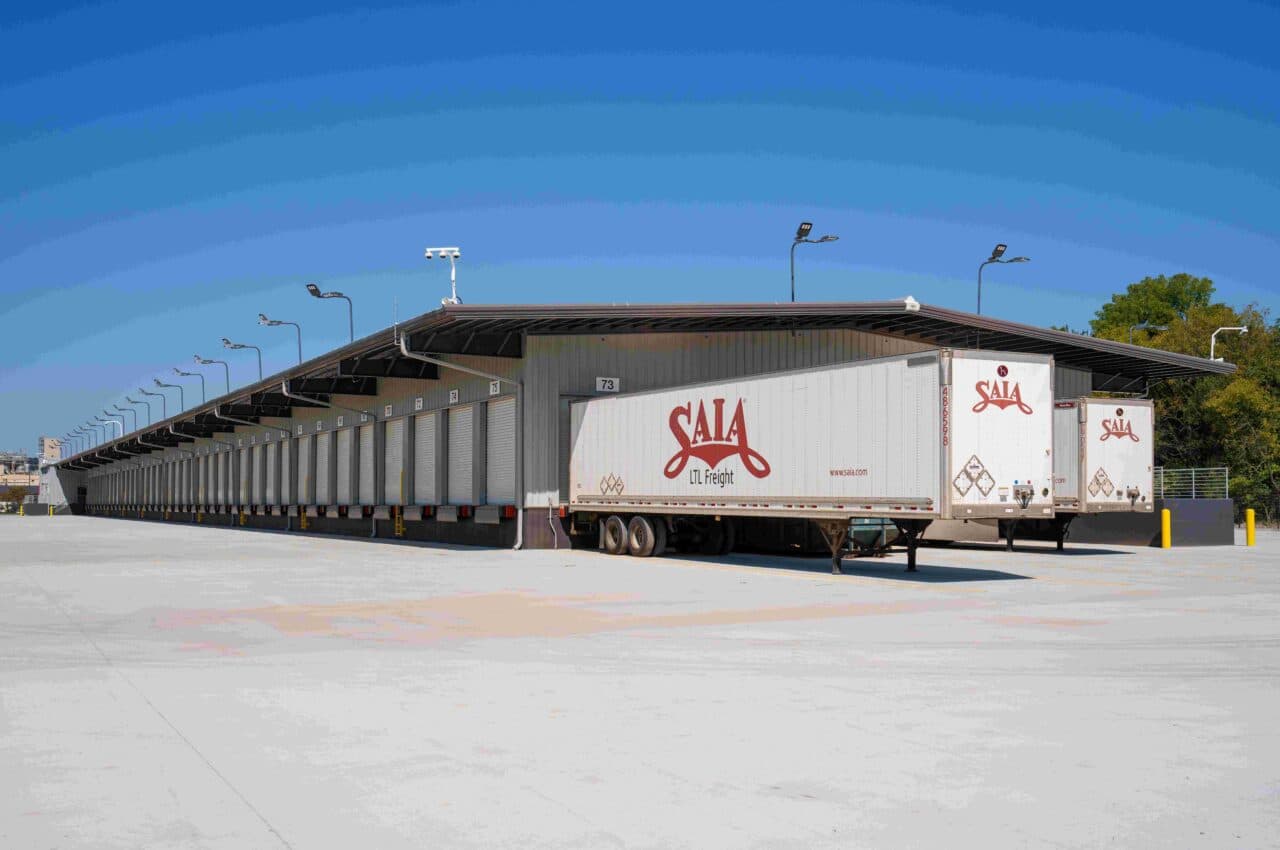
Truck terminal construction is delivered as an operationally driven general contracting scope from yard programming through active-operations turnover. Circulation, paving, and service systems are planned together as one site system.
- Turning-radius planning for loaded 53-foot trailers and off-road agricultural equipment where applicable
- Durable hardscape sequencing with concrete truck courts and aprons under heavy-load areas
- Service-bay and maintenance shop coordination with overhead door sizing and drainage
- Driver support building delivery with appropriate occupancy and life-safety requirements
- Site lighting and security camera coverage planning for 24-hour operations
- Fueling support infrastructure and spill containment coordination
Our Truck Terminal Construction Process
Truck terminal delivery follows an operations-first sequence from yard programming through site commissioning. The site plan, paving section, and service systems drive every other construction decision.
01Yard and circulation programming
We start by mapping the terminal's daily truck volume, vehicle types, dock or drop-yard configuration, maintenance frequency, and fueling requirements against the available site. For Bryan terminals on Highway 6 or Highway 21 corridor properties, we also review TxDOT access permit requirements and design driveway geometry that satisfies both TxDOT and the operational requirements of the fleet.
Civil and paving release
Site grading, underground utilities, and paving subbase are released as the first construction package. Truck court paving in Bryan is typically reinforced concrete rather than asphalt because continuous heavy-truck loading in summer heat causes asphalt rutting that requires costly maintenance within a few years of opening. Subbase moisture-conditioning on Brazos County clay is verified by geotechnical testing before any paving begins.
Building and bay delivery
Driver support buildings, dispatch offices, and maintenance shops are constructed concurrently with site paving to minimize surface damage from building construction traffic. Service bay aprons are poured as part of the building pad so the bay floor and exterior apron form one continuous slab without a joint at the overhead door threshold.
Site systems integration
Fueling infrastructure, security lighting, camera systems, and gate automation are installed as paving is completed so the terminal can operate securely from the first day of activity. We coordinate BTU electrical service for the terminal's operational load — which includes not just the building but also fuel pump electrical, overhead doors, security systems, and yard lighting — as a single coordinated service package.
Operational turnover
Terminal turnover is timed to the owner's planned operational startup date. We coordinate with the owner's fleet manager and dispatcher to understand what needs to be in place for the first trucks to arrive and work backward from that date to set the construction schedule. A terminal that is physically complete but missing gate automation or fueling infrastructure is not operationally ready.
Where Truck Terminal Construction Creates the Most Value in Bryan
Bryan truck terminal construction serves regional carriers, agricultural transport operations, and fleet maintenance facilities. These project types represent where integrated site and building delivery makes the most operational difference.
Regional Dispatch and Drop-Yard Facilities
Regional carriers staging in Bryan for Brazos Valley distribution need drop-yard capacity, driver amenities, and basic maintenance access. We design these terminals for the specific fleet size and carrier pattern of the operator rather than a generic trucking template.
Agricultural Transport Support Facilities
Agricultural transport operations in the Bryan area — grain haulers, livestock carriers, and farm equipment haulers — need terminal facilities designed for larger and heavier vehicles than standard OTR trucking. We plan turning geometry, gate widths, and paving sections around the specific vehicles in the owner's fleet.
Fleet Maintenance Hubs
Transportation companies whose maintenance operations are based in Bryan need purpose-built maintenance facilities with service bays, parts storage, tire mounting equipment, and wash bays designed for their specific truck and trailer types. We coordinate building systems and drainage requirements for those specialized maintenance functions.
Heavy-Use Paving, Circulation, and Bryan Terminal Site Conditions
Truck terminal paving durability is a long-term economic decision. The difference in first cost between a properly designed concrete truck court and an asphalt truck court is recovered in five to eight years through reduced maintenance, and concrete typically outlasts asphalt by 15 years or more under loaded-truck cycling. We recommend reinforced concrete for all truck court and apron areas on Bryan terminal projects.
State highway access permits for terminal properties along Highway 6 and Highway 21 require TxDOT review and approval. Those approvals can take 60 to 90 days for complex access designs. We initiate TxDOT coordination as soon as the site plan is developed enough to show driveway locations and traffic impact information.
Related Markets
This service is available across Bryan and nearby regional markets where commercial and industrial owners need one accountable project lead from planning through closeout.
Bryan, TX
Bryan is the industrial and heritage anchor of the Brazos Valley — a working city with manufacturing roots, a historic downtown Texas Avenue corridor, Blinn College, the Texas A&M Health Science Center, and active commercial growth along Highway 6 and the RELLIS Campus corridor.
View location page
College Station, TX
College Station adds university-adjacent commercial demand, medical growth, and mixed owner-user projects to the broader Bryan market, with active corridors and user-facing finish requirements driven by the TAMU community.
View location page
Wixon Valley, TX
Wixon Valley is a small unincorporated community within Bryan's service radius where owner-user commercial buildings, support industrial, and agricultural-adjacent facilities benefit from general contracting with local Brazos Valley knowledge.
View location page
Hearne, TX
Hearne is a Robertson County logistics and industrial support market north of Bryan along the Highway 6 and US 79 corridor where warehouse delivery, fleet terminals, and service-commercial buildings need practical general contracting.
View location page
Caldwell, TX
Caldwell is the Burleson County seat on the Highway 21 corridor connecting Bryan to the Austin market, with owner-user commercial and industrial construction driven by agricultural services, local business growth, and the county's working agricultural economy.
View location page
Franklin, TX
Franklin is the Robertson County seat north of Bryan on the Highway 6 corridor with civic, commercial, and industrial-support construction demand for county government, local businesses, and the agricultural economy.
View location page
Frequently Asked Questions
What paving section is appropriate for truck court construction in Bryan?
Loaded truck courts in Bryan typically require 8 to 10 inch reinforced concrete over a treated subbase to manage the combination of 80,000-pound truck loads, expansive clay subbase movement, and summer heat. We base the specific section on the project's geotechnical report and the owner's fleet loading data.
How do you manage TxDOT access permit requirements for Bryan terminal sites on state highways?
TxDOT access permits for truck terminals on state highways require traffic impact analysis, driveway geometry approval, and occasionally turn-lane or deceleration-lane improvements. We coordinate those requirements with the civil engineer and TxDOT's Bryan district office during the site plan phase so approvals are in process before construction begins.